Publications

Grouped by topic; a paper can sit under more than one. This list matches my Google Scholar profile.

* equal contribution† corresponding authorLead-authored: first, co-first or corresponding author

61 papers

2026

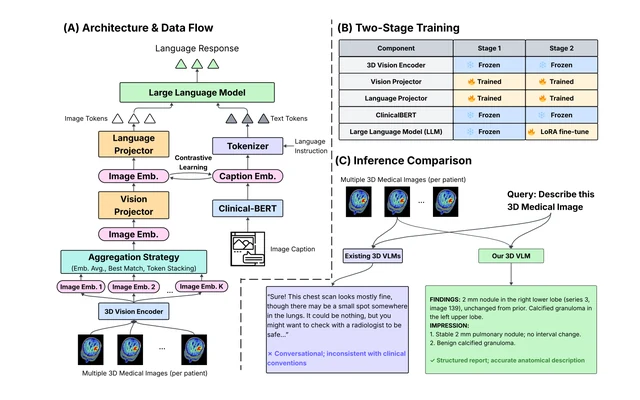
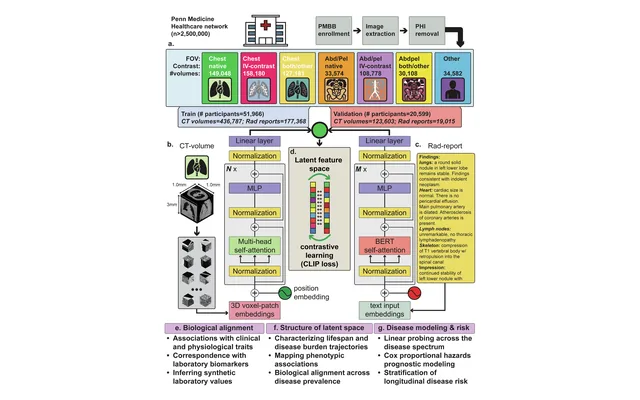
Figure 1 from the paper: native 3D VLM architecture, two-stage training, and comparison with existing 3D VLMs

A Unified 3D Vision-Language Framework for Structured Multi-Study Volumetric Report Generation

Rahul Shukla*, Ruiming Wu*, Hongzhuo Chen, Shu Yang, Duy Duong-Tran, Duy Minh Ho Nguyen, Mathias Niepert, Cameron Beeche, James Gee, Jeffrey Duda, Rakesh Sharma, Christos Davatzikos, Walter Witschey, Bojian Hou†, Li Shen†

MLMI 2026 Vision & multimodal

A native 3D vision-language framework for structured CT and MRI report generation that handles multiple studies per patient, keeps vision-text alignment with a joint generative-contrastive objective, and outperforms 2D and 3D medical VLMs on the Penn Medicine BioBank.

Figure 1 from the paper

Generalizable CT Vision-Language Modeling for Population Health and Disease Risk

Cameron A. Beeche, Joonghyun Kim, Hamed Tavolinejad, Bingxin Zhao, Jessie Dong, Rakesh Sharma, Jeffrey T. Duda, James Gee, Farouk Dako, Anurag Verma, Colleen Morse, Bojian Hou, Li Shen, Hersh Sagreiya, Christos Davatzikos, Scott M. Damrauer, Rohan Shad, Marylyn D. Ritchie, Daniel Rader, Qi Long, Eric Eaton, Gengwei Zhang, Tianlong Chen, Charles E. Kahn, Julio A. Chirinos, Walter R. Witschey

npj Digital Medicine 2026 Vision & multimodal

Percival, a CT vision-language model trained on over 400,000 CT-report pairs from the Penn Medicine BioBank, learns representations that track clinical, physiological, and longitudinal variation across patients.

2025

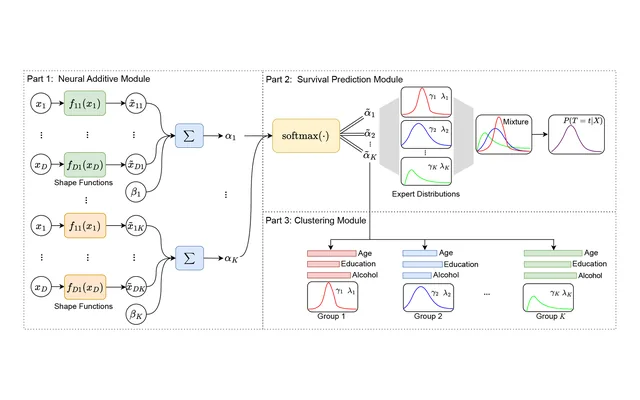
Figure 1 from the paper: illustration of the IRIS model and its modules

IRIS: Interpretable Risk Clustering Intelligence for Survival Analysis

Kazi Noshin*, Bojian Hou*, Mary Regina Boland, Zixuan Wen, Boning Tong, Li Shen, Aidong Zhang

IEEE BigData 2025 Interpretability · Clustering & survival analysis

IRIS learns patient risk clusters directly from data while estimating feature contributions, trading a modest loss in time-to-event accuracy for interpretable risk stratification.

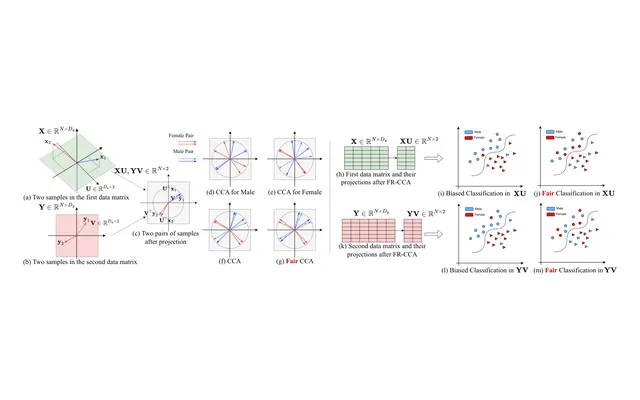
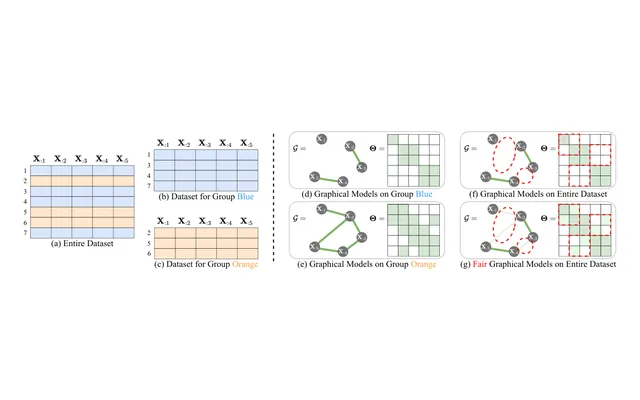
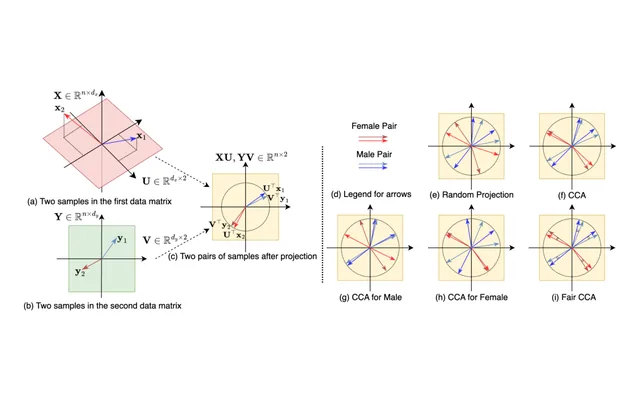
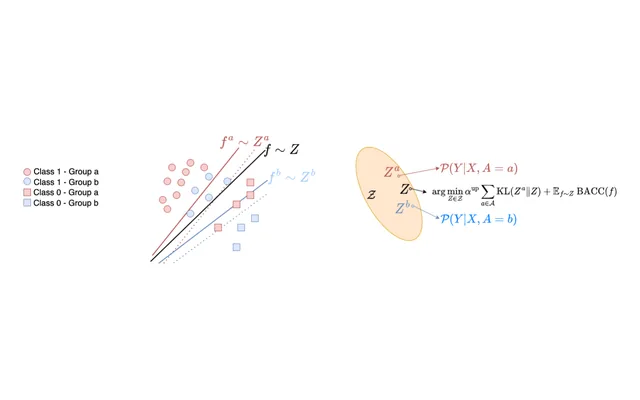
Figure 1 from the paper: Illustration of FR-CCA with the sensitive attribute sex as an example (female and male)

Fair CCA for Fair Representation Learning: An ADNI Study

Bojian Hou*, Zhanliang Wang*, Zhuoping Zhou, Boning Tong, Zexuan Wang, Jingxuan Bao, Duy Duong-Tran, Qi Long, Li Shen

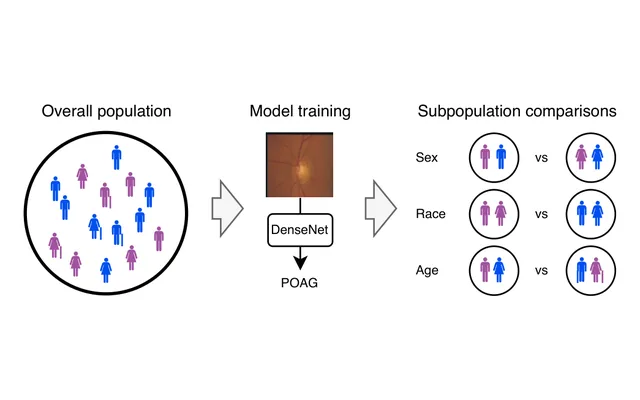
ACM BCB 2025 Fairness · Vision & multimodal

A fair CCA method whose projected features are independent of sensitive attributes, improving fairness in downstream classification on ADNI neuroimaging data while keeping correlation performance.

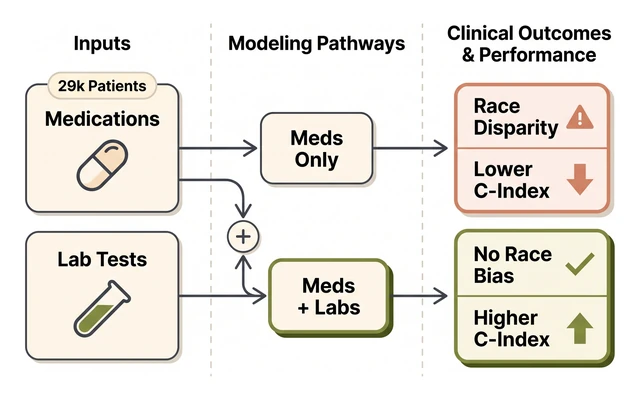
Overview illustration: survival models with medications only versus medications plus laboratory tests; the combined model removes the race disparity and raises the C-index

Determining the Importance of Clinical Modalities for NeuroDegenerative Disorders and Risk of Patient Injury Using Machine Learning and Survival Analysis

Kazi Noshin, Mary Regina Boland, Bojian Hou, Weiqing He, Victoria Lu, Carol Manning, Li Shen, Aidong Zhang

AMIA Summit 2025 Clustering & survival analysis · Interpretability

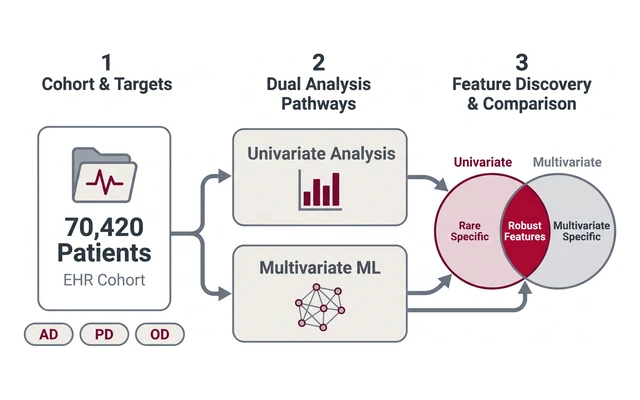
Survival analysis on EHR data from 29,045 older patients examines how medications, laboratory tests, and sensitive attributes affect fall and injury risk in neurodegenerative disorders.

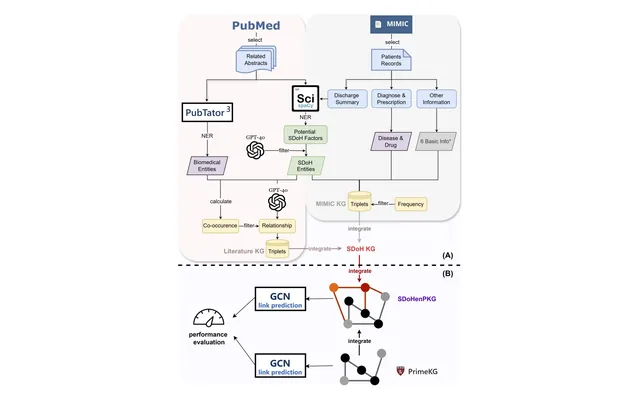
Figure 1 from the paper

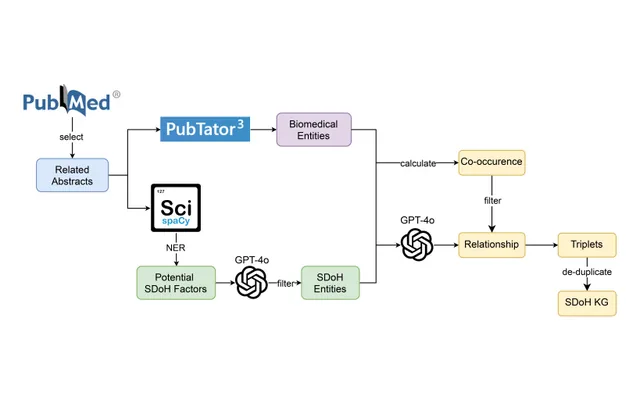
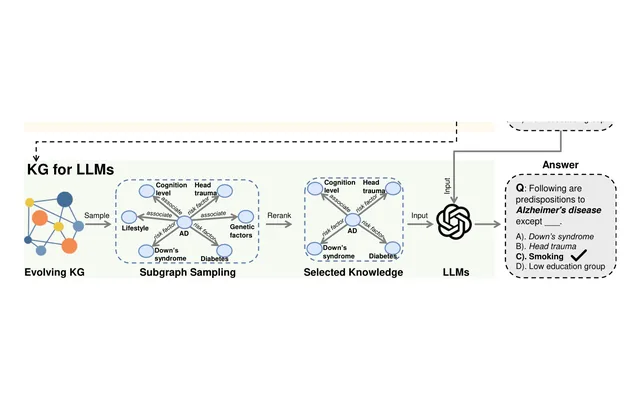
A Novel Computational Analysis Integrating Social Determinants Information from EHR and Literature with Alzheimer's Disease Biological Knowledge through Large Language Models and Knowledge Graphs

Tianqi Shang, Shu Yang, Tianhua Zhai, Weiqing He, Elizabeth Mamourian, Jiayu Zhang, Bojian Hou, Joseph Lee, Duy Duong-Tran, Jason H. Moore, Marylyn D. Ritchie, Li Shen

Innovation in Aging 2025 LLM applications & NLP

Builds a knowledge graph of about 92k triplets linking social determinants from literature and EHR to Alzheimer's disease biology, evaluated by link prediction and validated with multimodal biological data.

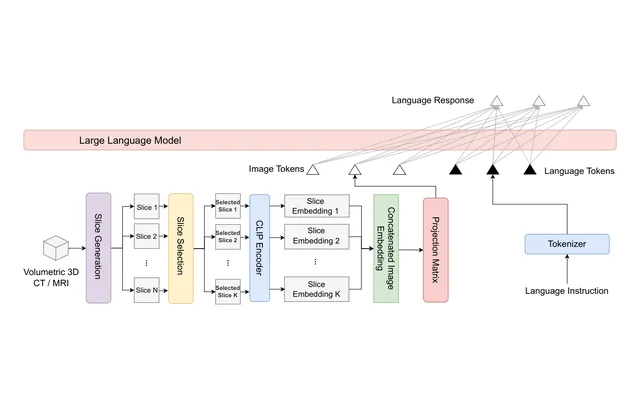
Figure 1 from the paper: Architecture pipeline for adapting 2D vision-language models to 3D medical scans

Adapting Vision-Language Models for 3D CT/MRI Understanding on PMBB via Slice Selection and Explanation Analysis

Hongzhuo Chen*, Rahul Shukla*, Ruiming Wu, Shu Yang, Duy Duong-Tran, Duy Minh Ho Nguyen, Mathias Niepert, Cameron Beeche, James Gee, Jeffrey Duda, Rakesh Sharma, Christos Davatzikos, Walter Witschey, Bojian Hou†, Li Shen†

ICCV 2025 Workshop (VADH) Vision & multimodal · Interpretability

Adapts 2D medical vision-language models to 3D CT and MRI through slice selection and instruction tuning; selecting about half of the slices gave the best accuracy while cutting training cost by over 40%.

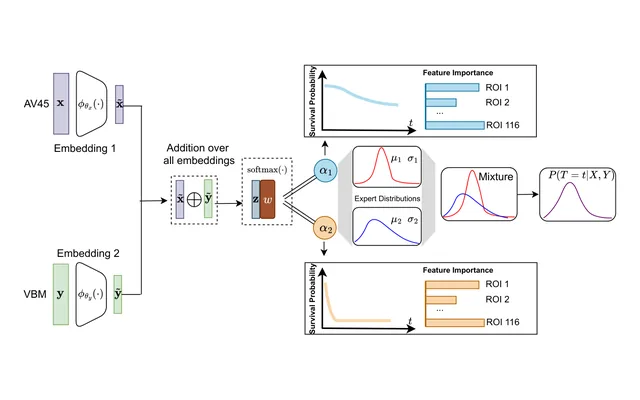
Figure 1 from the paper: the multi-modal deep clustering survival machines (MMDCSM) mechanism

Multi-Modal Deep Clustering Survival Machines for Alzheimer's Disease Subtype Discovery

Zixuan Wen, Bojian Hou, Weiqing He, Shu Yang, Jason H. Moore, Andrew J. Saykin, Heng Huang, Paul M. Thompson, Marylyn D. Ritchie, Christos Davatzikos, Li Shen

ICCV 2025 Workshop (VADH) Clustering & survival analysis · Vision & multimodal

Fuses modality-specific encoders with a mixture of Weibull experts to discover patient subtypes and predict Alzheimer's conversion risk in a cohort of 382 MCI patients.

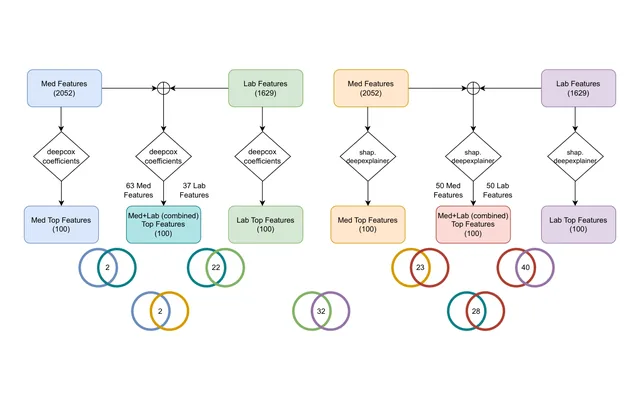
Figure 1 from the paper: DeepCox roll-out and SHAP-DeepExplainer Intersection

Integrating Social Determinants of Health in a Multi-Modal Deep Clustering Survival Model for Injury-Risk in Alzheimer's and Related Dementia Patients

Kazi Noshin, Mary Regina Boland, Bojian Hou, Weiqing He, Victoria Lu, Li Shen, Aidong Zhang

AIMedHealth 2025 (PMLR 281) Clustering & survival analysis · Vision & multimodal

Adding social determinants of health to multi-modal deep clustering survival models improved injury and fall risk prediction for patients with Alzheimer's and related dementias.

2024

Figure 1 from the paper: The overview pipeline of DALK

DALK: Dynamic Co-Augmentation of LLMs and KG to answer Alzheimer’s Disease Questions with Scientific Literature

Dawei Li, Shu Yang, Zhen Tan, Jae Young Baik, Sukwon Yun, Joseph Lee, Aaron Chacko, Bojian Hou, Duy Duong-Tran, Ying Ding, Huan Liu, Li Shen, Tianlong Chen

EMNLP 2024 Findings LLM applications & NLP

Co-augments an LLM and a knowledge graph built from Alzheimer's disease literature, retrieving knowledge from the graph to improve question answering on a new ADQA benchmark.

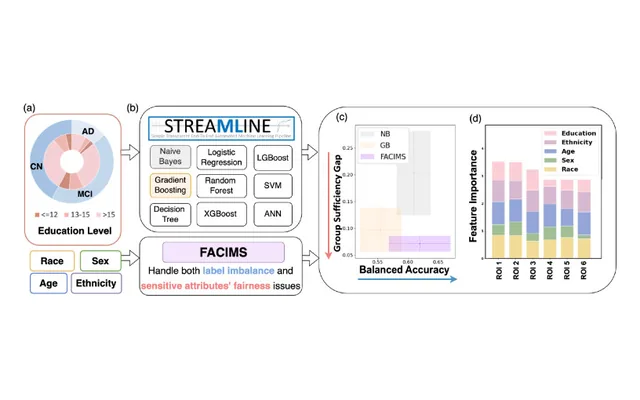
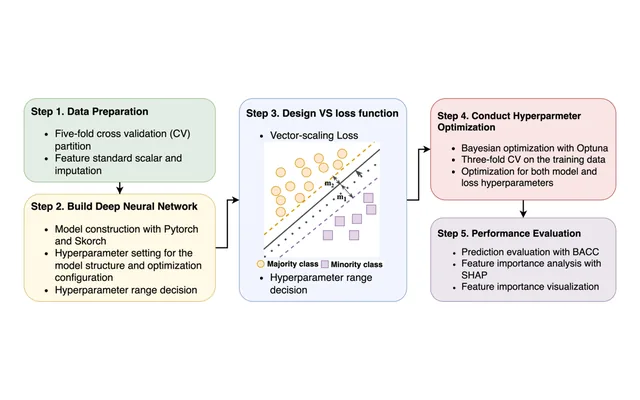
Figure 1 from the paper: flowchart of the study process

Ensuring Fairness in Detecting Mild Cognitive Impairment with MRI

Boning Tong, Travyse Edwards, Shu Yang, Bojian Hou, Davoud Ataee Tarzanagh, Ryan J. Urbanowicz, Jason H. Moore, Marylyn D. Ritchie, Christos Davatzikos, Li Shen

AMIA 2024 Distinguished Paper Award Fairness

A fairness-aware method for label-imbalanced MRI classification of mild cognitive impairment, built on FACIMS and evaluated across five sensitive attributes.

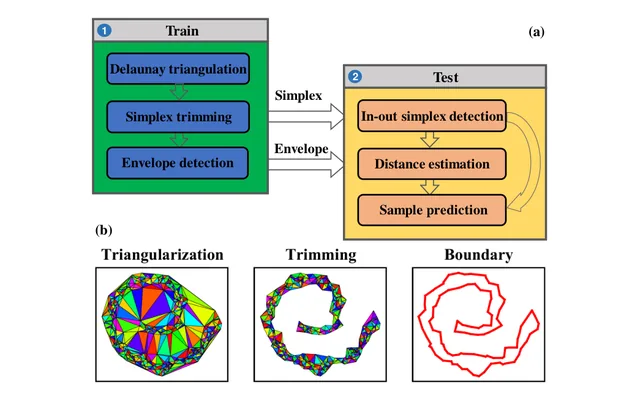
Figure 1 from the paper: The pipeline of the proposed Manifoldron

Manifoldron: Direct Space Partition via Manifold Discovery

Dayang Wang, Feng-Lei Fan, Bo-Jian Hou, Hao Zhang, Zhen Jia, Boce Zhang, Rongjie Lai, Hengyong Yu, Fei Wang

IEEE TNNLS 2024 Other

A model that derives decision boundaries directly from data by discovering its manifold structure, instead of a parameterized partition of the sample space.

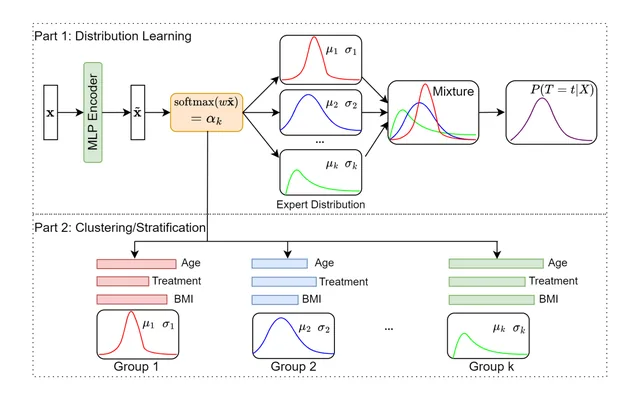
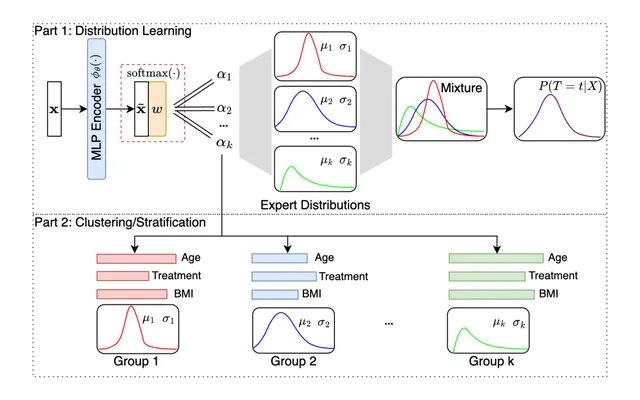
Figure from the paper: mechanism of Deep Clustering Survival Machines

Interpretable Deep Clustering Survival Machines for Alzheimer's Disease Subtype Discovery

Bojian Hou*, Zixuan Wen*, Jingxuan Bao, Richard Zhang, Boning Tong, Shu Yang, Junhao Wen, Yuhan Cui, Jason H Moore, Andrew J. Saykin, Heng Huang, Paul M. Thompson, Marylyn D. Ritchie, Christos Davatzikos, Li Shen

Medical Image Analysis 2024 Interpretability · Clustering & survival analysis

Deep Clustering Survival Machines model survival times as a mixture of expert distributions weighted per patient, used to cluster MCI patients into subgroups with different risks of converting to Alzheimer's disease.

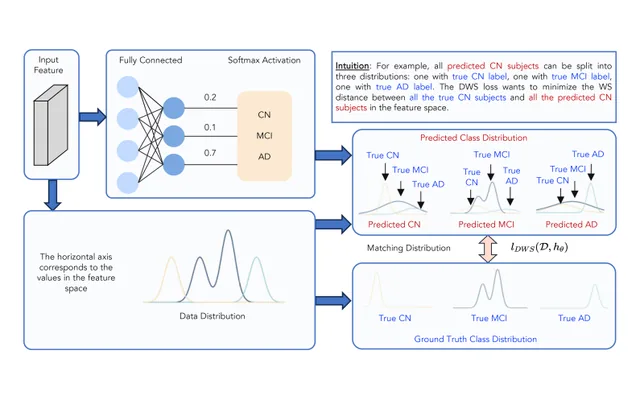
Figure 1 from the paper: schematic of the distance-weighted Sinkhorn loss

Distance-weighted Sinkhorn loss for Alzheimer's disease classification

Zexuan Wang, Qipeng Zhan, Boning Tong, Shu Yang, Bojian Hou, Heng Huang, Andrew J. Saykin, Paul M. Thompson, Christos Davatzikos, Li Shen

iScience 2024 Other

A distance-weighted Sinkhorn loss that penalizes misclassified samples by their distance to the true class distribution, applied to Alzheimer's disease stage classification.

2023

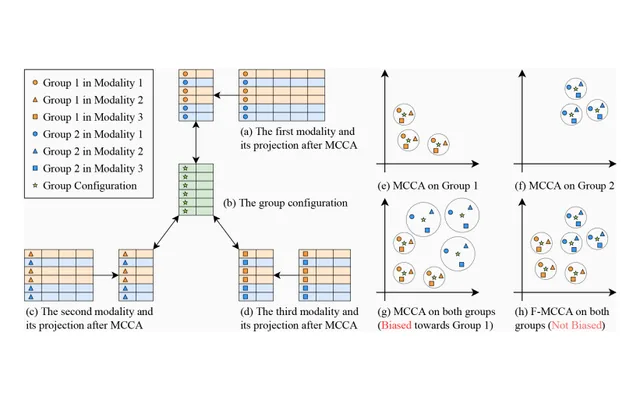
Figure 1 from the paper: Illustration of CCA and F-CCA, with the sensitive attribute being sex (female and male)

Fair Canonical Correlation Analysis

Zhuoping Zhou*, Davoud Ataee Tarzanagh*, Bojian Hou*, Boning Tong, Jia Xu, Yanbo Feng, Qi Long, Li Shen

NeurIPS 2023 Fairness · Vision & multimodal

Learns global CCA projections that close the gap in correlation across protected groups with little loss of accuracy.

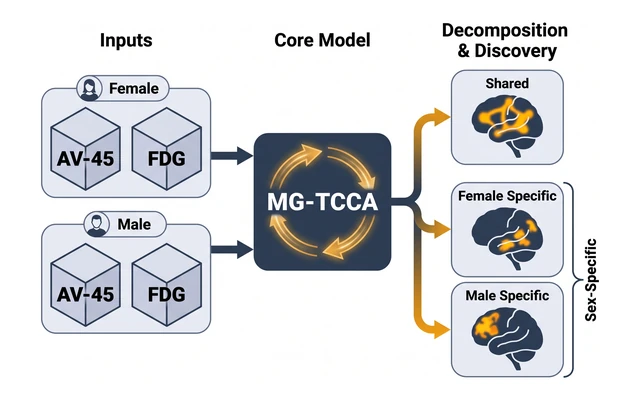
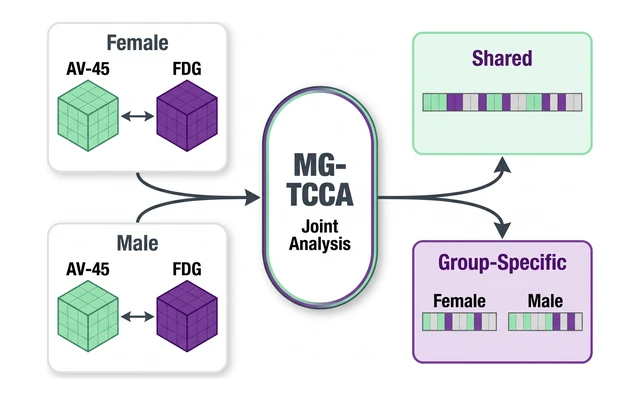
Overview illustration: AV-45 and FDG PET tensors from female and male groups analyzed jointly by MG-TCCA into shared and group-specific canonical weights

Multi-Group Tensor Canonical Correlation Analysis

Zhuoping Zhou, Boning Tong, Davoud Ataee Tarzanagh, Bojian Hou, Andrew J. Saykin, Qi Long, Li Shen

ACM BCB 2023 Best Paper Award Fairness · Vision & multimodal

Multi-group tensor CCA that jointly analyzes subgroups of tensor data, such as brain imaging from different sexes or races, to find consistent signals.

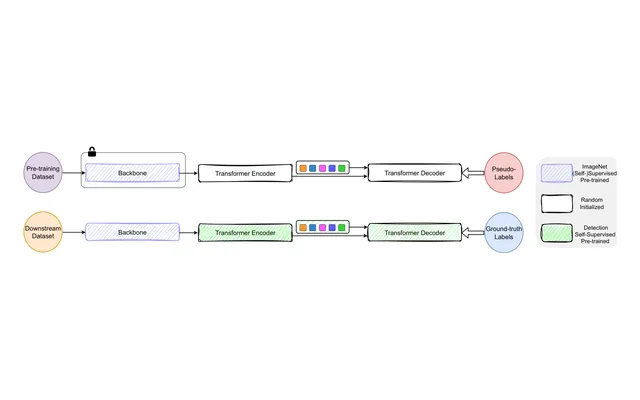
Figure 2 from the paper: the two-step self-supervised pre-training framework for DETR

Revisiting DETR Pre-training for Object Detection

Yan Ma, Weicong Liang, Bohan Chen, Yiduo Hao, Bojian Hou, Xiangyu Yue, Chao Zhang, Yuhui Yuan

arXiv 2023 Vision & multimodal
Shows that DETReg pre-training does not help strong DETR-based detectors with full data, and that simple self-training with an improved box predictor and Objects365 does.

2022

2021

2020

2019

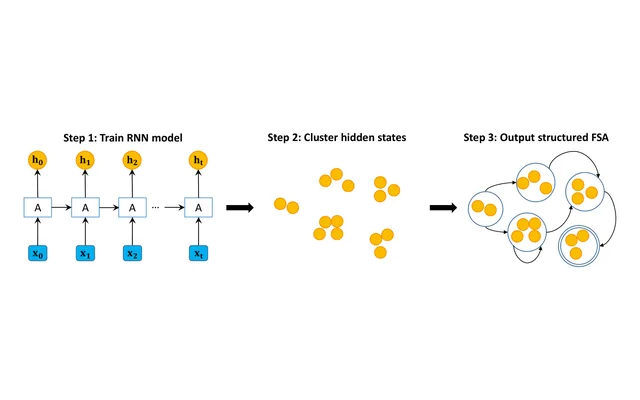
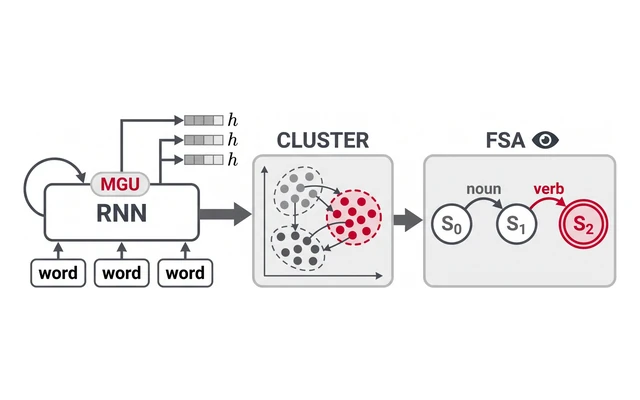
Overview illustration: RNN hidden states clustered into the states of a finite state automaton whose transitions are triggered by words

Learning Interpretability from RNN with Feature Changing

Bo-Jian Hou, Yuan Jiang

CCFAI 2019 Outstanding Student Paper Award Interpretability · Robustness

Learns finite state automata from RNNs when input features change, and studies how feature changes and the number of gates affect performance.

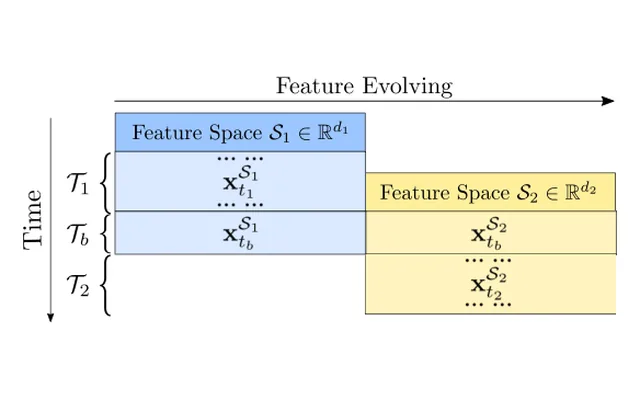
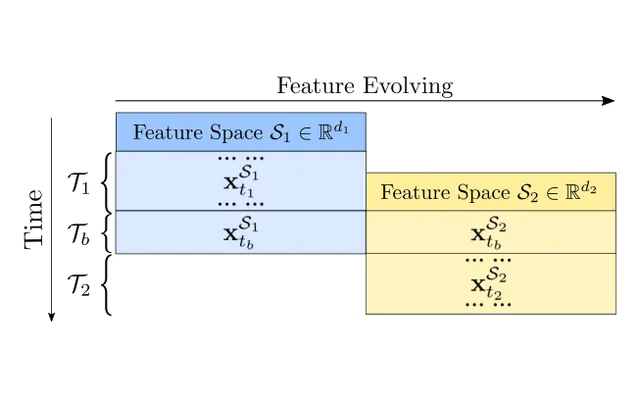
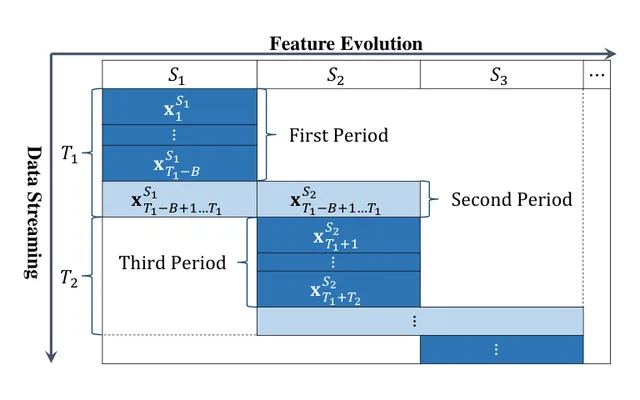
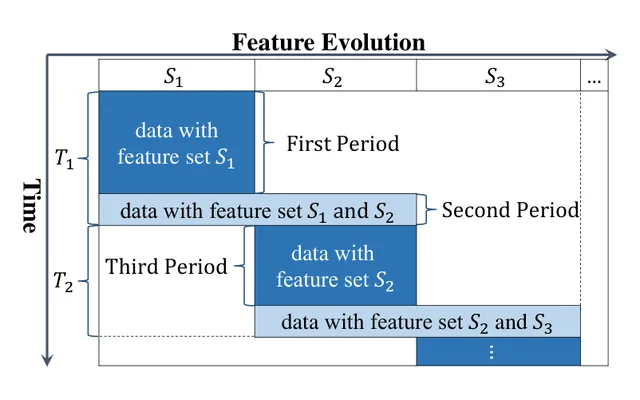
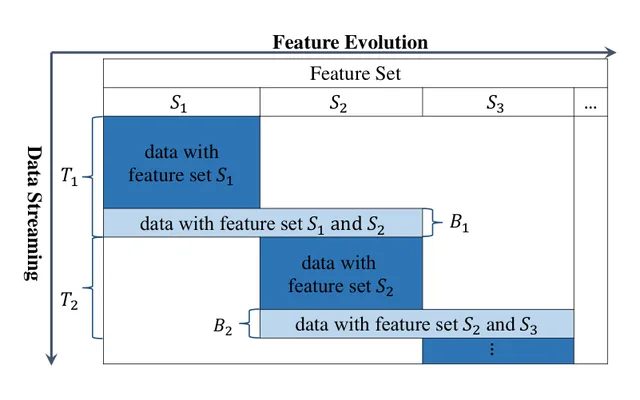
Figure 1 from the paper: Illustration that how data stream comes

Learning with Feature Evolvable Streams

Bo-Jian Hou, Lijun Zhang, Zhi-Hua Zhou

IEEE TKDE 2019 Robustness

Journal version of feature evolvable streaming learning: recovers vanished features from the overlap period and combines models with theoretical guarantees.

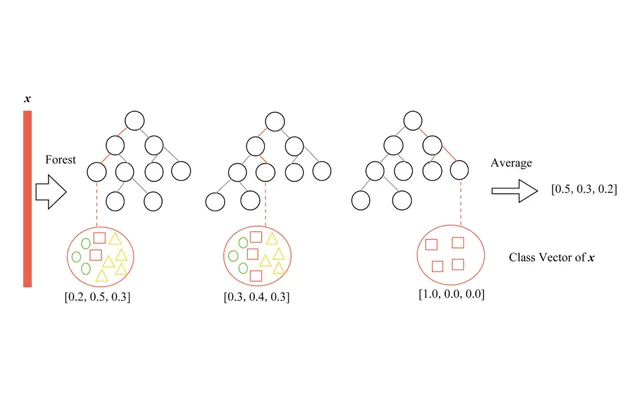
Figure 1 from the paper: illustration of class vector generation

Deep Forest for Multiple Instance Learning

Jie Ren, Bojian Hou, Yuan Jiang

J. Computer Research and Development 2019 Other

Multiple instance deep forest (MIDF), a deep forest structure adapted to multi-instance learning.

2017

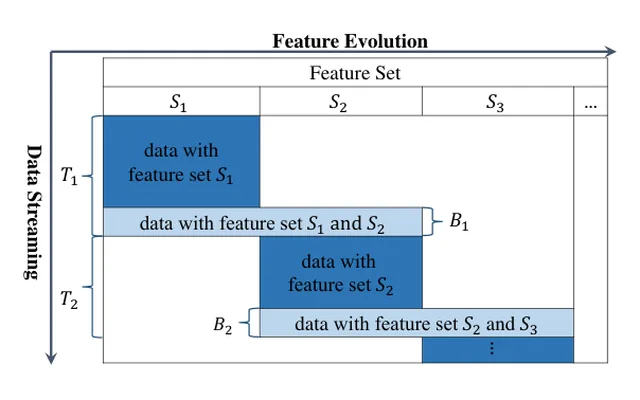
Figure 1 from the paper: Illustration that how data stream comes

Learning with Feature Evolvable Streams

Bo-Jian Hou, Lijun Zhang, Zhi-Hua Zhou

NIPS 2017 Robustness

Introduces learning when old features vanish and new ones appear, using an overlap period to keep reusing the old model, with theoretical guarantees.