Recommendation Systems
Scaling laws, ranking architectures, representation learning for ranking and retrieval.

AI Research Scientist at Meta
Mountain View, California
Also published as Bo-Jian Hou (侯博建)
I am an AI Research Scientist at Meta in Monetization and Meta Recommendation Systems (MRS). My work centers on LLM-style model architectures and scaling laws for massive-scale ads ranking, including Kunlun (KDD 2026), the architecture behind Meta's Generative Ads Model (GEM), and on representation learning that connects organic and ads signals for ranking and retrieval. I also continue my research on trustworthy large language models, especially calibration, uncertainty estimation, and preference alignment.
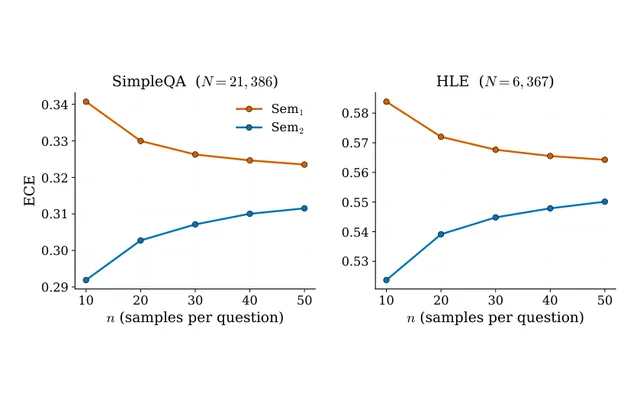 NeurIPS 2026 A Semantic-Sampling Framework for Evaluating Calibration in Open-Ended Question Answering
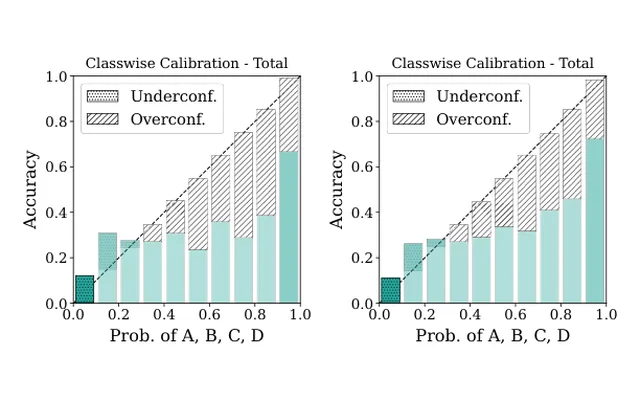 COLM 2026 Beyond Post-Hoc Temperature Scaling: Bilevel Optimization for LLM Calibration
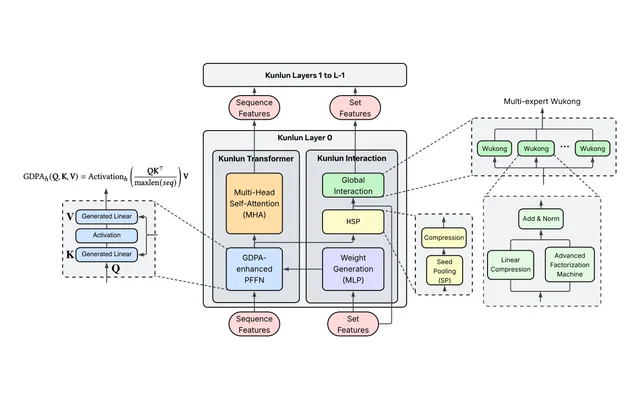 KDD 2026 Kunlun: Establishing Scaling Laws for Massive-Scale Recommendation Systems through Unified Architecture Design
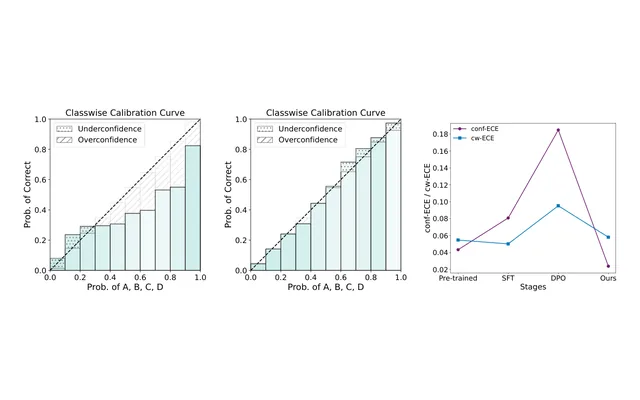 ICML 2025 Restoring Calibration for Aligned Large Language Models: A Calibration-Aware Fine-Tuning Approach
I am interested in both the theoretical foundations and the real-world deployment of machine learning, and in building AI systems that are technically rigorous, trustworthy, and socially responsible.
I earned my B.Sc. and Ph.D. in Computer Science at Nanjing University, where my doctoral work with Prof. Zhi-Hua Zhou in the LAMDA Group studied learning in open environments: data arrive as streams, and features appear, disappear, and evolve over time. This line of work appeared at NeurIPS, IJCAI, and AAAI and in TKDE and TNNLS, and received excellent doctoral dissertation awards from Jiangsu Province, JSAI, and Nanjing University.
As a postdoctoral fellow in the Department of Biostatistics, Epidemiology and Informatics at the University of Pennsylvania, advised by Prof. Li Shen, I led a Trustworthy AI research line on fairness, interpretability, calibration, and alignment, from classical models to large language models and often with medical data where errors are costly. I mentored 20+ students there, and our work appeared at NeurIPS, ICML, ICLR, and KDD.
At Meta, I bring the same perspective to recommendation and ads ranking at production scale.
Scaling laws, ranking architectures, representation learning for ranking and retrieval.
Calibration and uncertainty estimation, preference alignment, evaluation, fine-tuning, and LLMs with knowledge graphs.
Fairness, interpretability, and robustness to evolving features and data streams, from classical models to deep networks.
Vision-language models for 3D imaging, multi-view representation learning with canonical correlation analysis, and deep clustering for survival analysis.
npj Digital Medicine 2026MLMI 2026ACM BCB 2023Medical Image Analysis 2024
* equal contribution† corresponding author
A recommendation architecture designed for predictable power-law scaling: it raises model FLOPs utilization from 17% to 37% on NVIDIA B200 GPUs, doubles scaling efficiency, and is deployed in major Meta Ads models.
Sem-ECE evaluates LLM calibration in open-ended QA by sampling answers, grouping them into semantic classes, and using class frequencies as confidence; two estimators are analyzed and tested on five commercial LLMs.
Replaces post-hoc temperature scaling with a bilevel objective that maximizes predictive entropy, solved by a first-order method that scales to LLMs; calibration gains are strongest out of domain.
Links post-alignment overconfidence to preference collapse and restores calibration with calibration-aware fine-tuning plus an EM-based ECE regularizer.
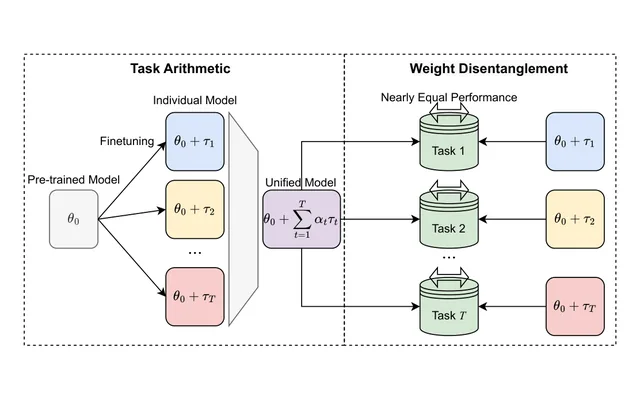
Fine-tuning only the attention modules improves weight disentanglement for model merging by task arithmetic, without the extra training cost of NTK linearization.
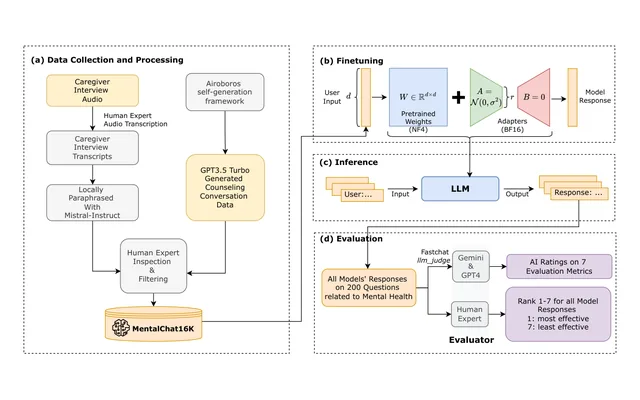
A benchmark that combines synthetic counseling dialogues with anonymized coach and caregiver session transcripts, for building and evaluating conversational mental health assistants.
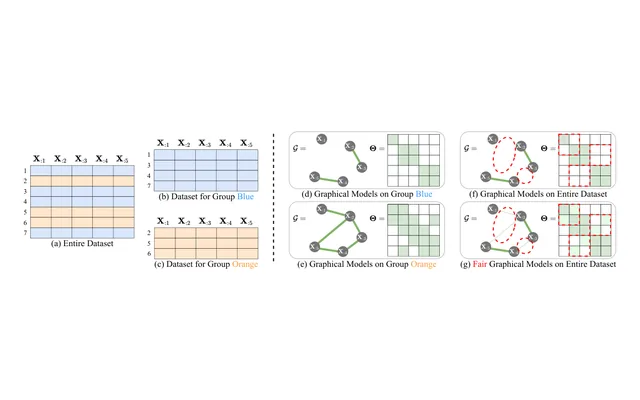
Fair estimation of Gaussian, covariance, and Ising graphical models by jointly minimizing a pairwise graph disparity error and the model loss.
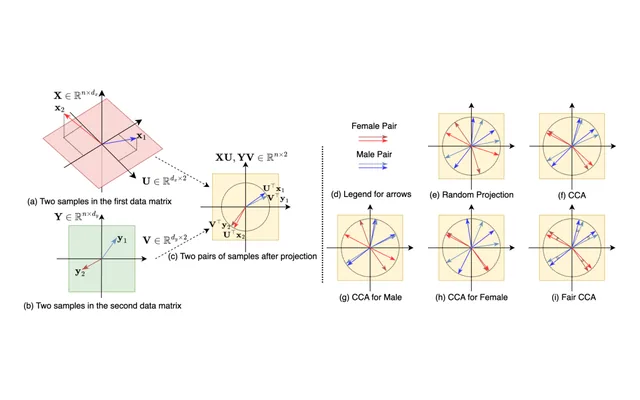
Learns global CCA projections that close the gap in correlation across protected groups with little loss of accuracy.
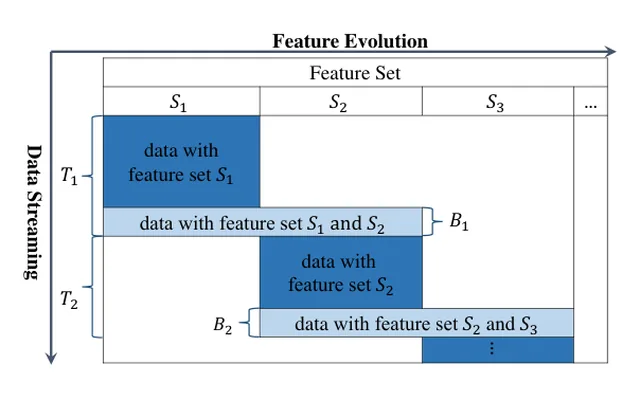
Introduces learning when old features vanish and new ones appear, using an overlap period to keep reusing the old model, with theoretical guarantees.
